
Radon is an invisible, radioactive gas found in outdoor air everywhere, where it is generally harmless. Once trapped inside buildings (homes, office buildings, schools…), radon may concentrate at levels that pose serious health risks. The Surgeon General has found exposure to radon gas to be the second leading cause of lung cancer in the United States. Wisconsin Indoor Test Results, compiled by the Department of Health Services, is a useful resource for viewing radon levels from tests conducted throughout Wisconsin. While they estimate 1 in 10 homes will test at a level above the EPA action level, in some areas of the State, 46% of the homes are likely to exceed the action level. Breathing radon-concentrated air could be fatal.
A Quick History of Radon Testing in the Real Estate Transaction
Radon testing in homes was unheard of in the Madison area real estate market when I was first licensed in 1989. Interest in radon testing appeared in the early 1990s as the EPA reported findings from studies on the health risks of high-level radon exposure. I attended a company meeting in the winter of 1992-93 where two off-duty firefighters presented their radon testing and mitigation service to REALTORS. In those days, no proficiency standards existed, and those who jumped into the mitigation business did so with little or no competition. As you might imagine, it was easy to make a case to encourage radon testing as part of the real estate transaction, and the costs of testing and mitigation were high. The typical system installed ran around $3,000. At that time, the median price of a home in our market was $104,000. (2.88% of the price of the home.)
Protecting Clients and the Testing Contingencies
Around the time radon rose to national attention, the mitigation companies appeared, and buyer agency entered our market. For the first time, the practice of placing the buyer’s interests ahead of the seller’s was gaining traction. It makes sense that when your client is the buyer, not the seller, you would offer ways for your client (the buyer) to strengthen their negotiating position and provide protections unavailable to them from firms that do not offer buyer agency services. First, agents and then their Firms began including inconsistent and legally questionable testing contingencies in the offers they drafted for their buyer clients. In an attempt to provide a consistent and legally defensible contingency, the Wisconsin REALTORS Association worked with the State of Wisconsin to incorporate a radon testing contingency into the approved offer-to-purchase agreement.
The Radon Testing Contingency is Optional
When the real estate market favors the buyer, sellers have little choice but to accept the buyer’s terms or to buy their way out of risky contingencies by making price concessions. By the time the housing market crash of 2008 extended into the mid-2010s, checking the box to include the radon-testing contingency in an offer became standard practice across the industry. Sellers had no leverage to negotiate the test out of the offer.
Since 2021, the market has favored the seller. The radon testing contingency is still in the Offer to Purchase as an optional provision. Including the test in your offer won’t protect you from exposure to radon gas, but it may be the condition that kills your chance of getting your offer accepted.
Price of a Radon Test
Short-term radon tests may cost as little as $30. Testing conducted by a Wisconsin-certified home inspector, as required under a Wisconsin residential offer-to-purchase agreement contingency, may cost $150 to $250. Angie’s List quotes a higher average price.
A three-day radon test done as part of a home purchase testing contingency will give you a radon result for a smidgeon of time. For a more accurate indicator of your annual radon exposure at home, the EPA recommends a long-term (90-day) test.
Price of a Radon Mitigation System
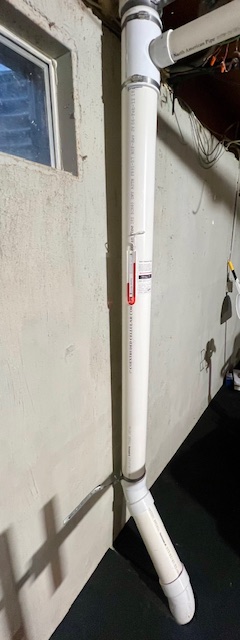
The main components of a mitigation system include inexpensive PVC pipe, an electric fan, and an easy-to-read pressure monitoring device. In the Madison market, competition for mitigation business is strong; prices have regressed since 1992. Without seeking competitive bids, you can expect to pay less than $1,500 to have a mitigation system installed in a typical home. A tiny fraction of the $420,000 median home price. (.357% of the home’s price.) Shop around, and you’re likely to find that a fully functioning, professionally installed, and guaranteed system costs less than $1,200.
Let’s do the Math
I’ll be conservative. The short-term radon test costs $150 and will give you a result the EPA says is unreliable for determining your long-term exposure. The mitigation system costs $1,500 and is guaranteed to reduce the radon level below the EPA action level.
The odds of being exposed to radon gas at levels above the EPA’s action level range from 1 in 10 to 1 in 2. When the cost of an unreliable test is 10% of the cost of a mitigation system, it seems prudent to buy the house and have a professional install a guaranteed-effective system for $1,200 to $1,500.
Some REALTORS Argue for Testing
I’ve heard REALTORS adamantly argue that they would not write an offer for a client without including a radon testing contingency. Given that home sellers have options and will reject offers that require them to worry for a minute about whether the buyer will walk away or renegotiate later, that argument is troublesome. Uninformed buyers look to REALTORS (and lawyers) to protect them from what they do not know. They also look for guidance to help them achieve their goal. Anyone can write an offer to protect a buyer from anything that could go wrong, but those offers that wrap a buyer in protective bubble wrap don’t get accepted in this market. I say the higher level of service is to help a buyer understand the facts, assess the situation, consider the options, and arrive at an informed decision to submit an offer with a reasonable chance of being accepted without exposing the buyer to risks they cannot live with. Projecting personal fears about what we don’t understand and failing to give buyers the facts and resources to be active participants in drafting their offer can be fatal to a buyer’s opportunity to own a home they have their heart set on.
Conclusion
FACTS:
Radon is known to cause lung cancer.
Radon is naturally occurring at various levels everywhere.
Radon levels fluctuate based on atmospheric pressure.
A low reading today is no guarantee of your long-term exposure.
Every home in Wisconsin likely has some level of radon gas, and in some areas, as many as 50% of homes have levels above the EPA action level.
A test may cost $150.
A mitigation system may cost $1,500 or less.
A test won’t protect you from radon exposure, but a mitigation system will.
In a seller-favored market, the offer with the least uncertainty for the seller is more attractive than one that includes conditions requiring the seller to wait and worry.
My opinion:
Get your offer accepted and have a professional mitigation company install a system in your home after you close on your purchase. Planning to invest $1,500 in a professionally installed mitigation system after you own the home will let you save the $150 you would have spent on the test and give you a home guaranteed to have an indoor radon level below the EPA action level.